
The Architecture of Trust
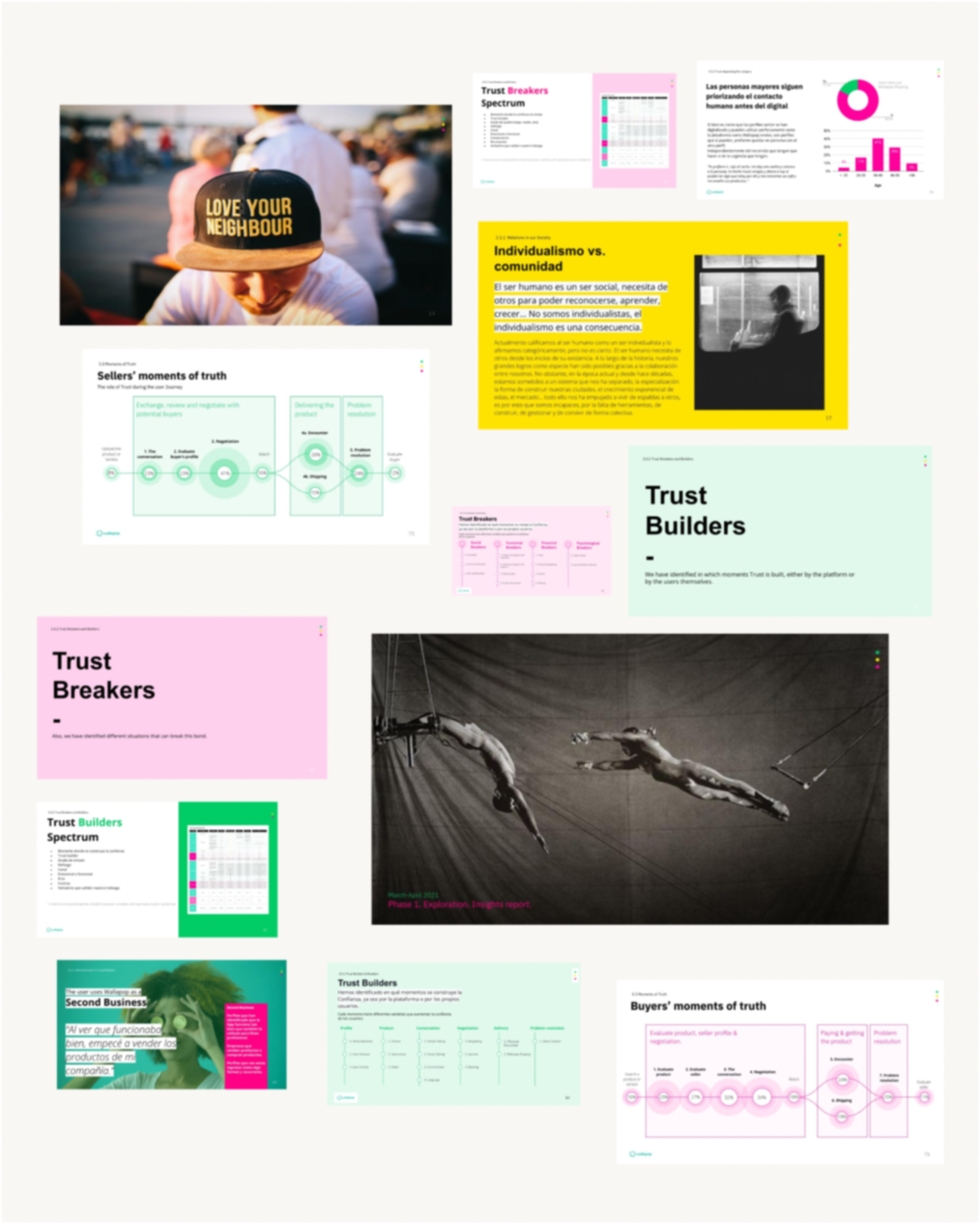
Why trust is not a given and it's something we design.
Trust is the invisible force that holds teams together, turns users into loyal customers, and transforms a product into a relationship. And yet… it’s often taken for granted.
We talk about trust as if it “just happens”, a side effect of a good product or clear communication. But the truth is: trust is built, not given. And when it’s missing, everything wobbles.
In our work with Companies like Wallapop, we explored how trust is experienced, both in the system and in the community of users. But the insights we uncovered there are not unique.
They echo what we’ve seen again and again, across organizations of all kinds:
👉 Trust isn’t a one-time decision. It’s a living, emotional process.
👉 It doesn’t live in logos or mission statements. It lives in moments.
👉Is difficult to build, but easy to break.
Moments where someone chooses to believe.
Moments where you show you’re worth believing in.
Trust is emotional, not transactional.
People don’t trust platforms or brands because everything always goes right.
They trust when, even in the face of error, they feel seen, respected, and responded to.
Because trust is not a metric, it’s an emotional stat, that has a repercussion, positive or negative, in a companies metrics.
In many projects, users have shared they were more likely to forgive a technical glitch than a lack of respect, care, or transparency.
Why? Because people don’t just remember what happened.
They remember how you made them feel.
“Trust isn’t lost when something breaks. It’s lost when no one takes responsibility.”
Trust doesn’t look the same to everyone.
Here’s where it gets even more complex: not everyone builds trust in the same way, trust is cultural.
It’s shaped by personal experiences, social context, and unconscious norms.
Some users trust what feels familiar.
Others trust what feels fast.
Some want emotional depth.
Others value detailed transparency.
Some see a clean interface as a sign of care.
Others read it as superficial or cold.
That’s why research is essential, not only as validation, but as revelation.
To build a product or service that feels trustworthy to different kinds of people, we must first understand what “trust” even means to them in the context and industry we are moving.
That’s where deep listening, emotional insight and inclusive design make the difference.
From the individual to the collective: a shift in how we build trust
In branding, product and culture, we’re witnessing a shift:
We’re moving from individual positioning to collective meaning.
Historically, trust came from identity (“this is who we are”).
Today, it comes from community (“this is who we’re with”).
We no longer trust companies because of what they say about themselves, but because of the stories and behaviors we see from the people who use them, work in them, and shape them.
Here’s a quick snapshot of that evolution:
In this new landscape, trust doesn’t come from what’s declared.
It comes from what’s shared, felt and embodied, together.
So, how do we design trust?
By listening before assuming.
By understanding before building.
By designing not just for what works, but for what feels safe, real and human.
Trust isn’t a feature.
It’s an ecosystem of small emotional signals.
Want to explore how trust shows up in your company’s experience, team or product?
Let’s find your trust builders and trust breakers, together.
